Tax depreciation is frequently described as the Australian property investor’s most powerful non-cash deduction. Unlike mortgage interest, strata levies, or council rates, claiming depreciation does not require an ongoing out-of-pocket cash outflow; it is an allowable accounting deduction for the natural wear and tear of a physical building and its mechanical assets over time.
Division 43 (Capital Works) vs. Division 40 (Plant & Equipment)
Under the Income Tax Assessment Act 1997 (ITAA97), property depreciation is segregated into two primary statutory allowances:
- Division 43: Capital Works Deductions: Applies to the structural fabric of the building—concrete foundations, brickwork, timber framing, roofing, and permanent tiled surfaces. For residential properties commenced after September 1987, the ATO permits a deduction of 2.5% per year over 40 years based on historical construction cost.
- Division 40: Plant & Equipment: Covers removable mechanical and electrical fixtures—air conditioning split systems, hot water units, cooktops, carpets, and security systems. These assets are depreciated faster according to their individual effective lives.
The 2017 Second-Hand Plant & Equipment Rule Change
Investors acquiring established properties must be acutely aware of legislation enacted in May 2017. If you purchase an established second-hand residential property, you can no longer claim Division 40 depreciation on previously used plant and equipment assets. You may only claim Division 43 Capital Works, plus any brand-new plant items that you personally install post-acquisition.
This statutory limitation substantially alters the cash-flow equation when comparing established heritage dwellings with newly completed architectural developments. Factor this deduction profile into your asset structuring as reviewed in Property Ownership Structures in Australia.
The Role of the Quantity Surveyor
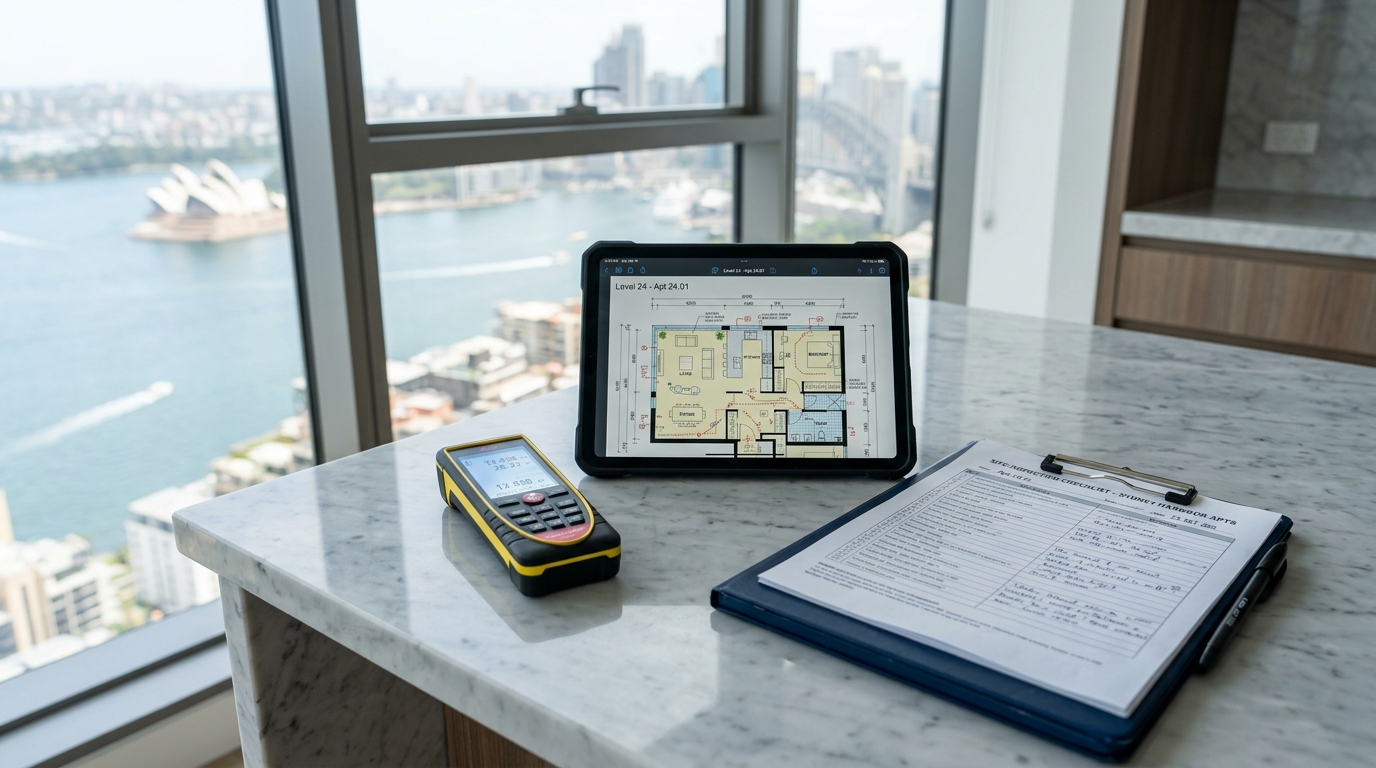
The ATO explicitly dictates that real estate agents, accountants, and building inspectors are not legally qualified to estimate historical construction costs. Only registered Quantity Surveyors (under Tax Ruling 97/25) hold the statutory accreditation to produce a legally compliant, 40-year tax depreciation schedule.
A comprehensive schedule typically costs between $600 and $800 (100% tax-deductible) and frequently uncovers $8,000 to $18,000 in first-year deductions, significantly buffering your portfolio against interest rate stress, as explored in Stress-Testing Your Property Portfolio Against Interest Rate Cycles.
Discover more wealth preservation frameworks on our Investment Strategy Hub or contact our team via the Contact Page.